
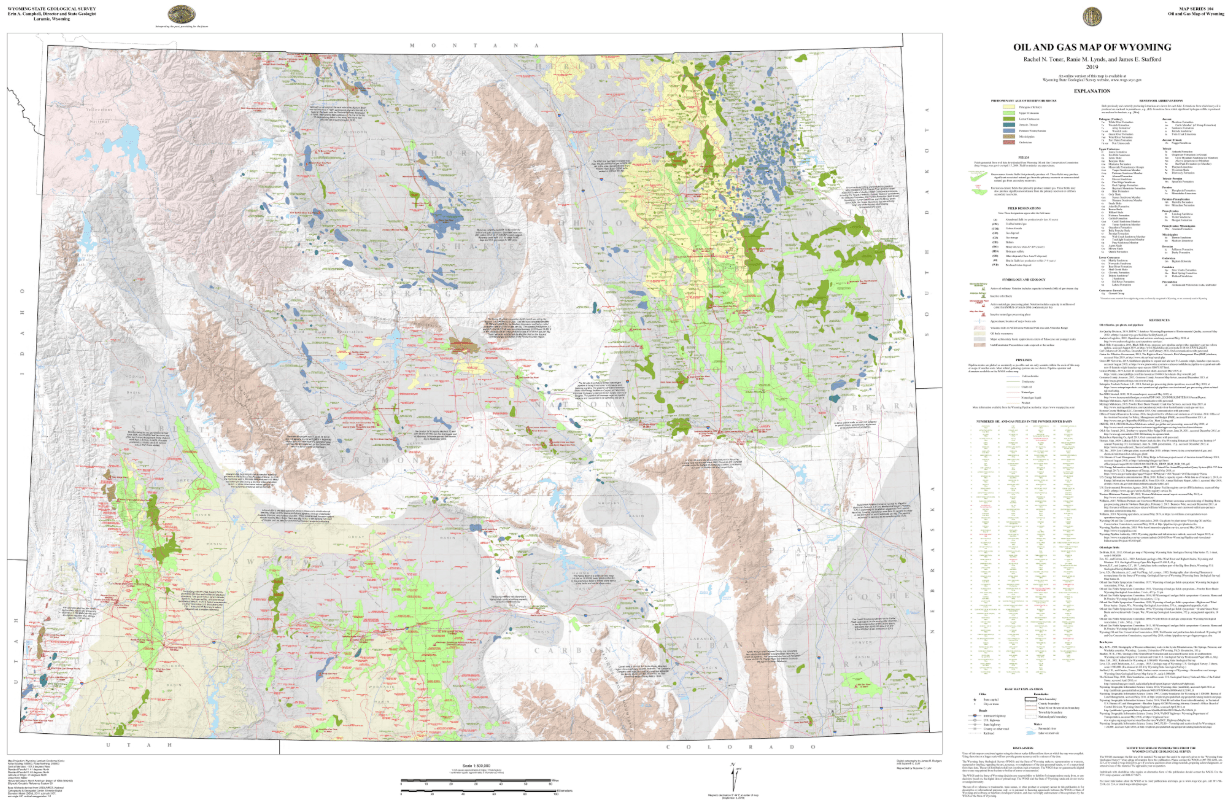
According to the Wyoming State Geological Survey (WSGS), Wyoming consistently ranks in the top ten in the United States for both oil and gas production, with the majority of historic and current activity taking place in one of eight distinct geologic basins:
The WSGS also provides an up-to-date Interactive Oil and Gas Map including active development fields, pipelines, and the latest well information from the Wyoming Oil and Gas Conservation Commission.
At the national level, the American Petroleum Institute has created interactive diagrams of both the oil and natural gas supply chains, providing an informative overview of the entire process. At its core, the industry can be distilled into three sections:
Upstream — Exploration and Production, including drilling and bringing product to the surface.
Midstream — Safe transportation and storage prior to refining, including pipelines.
Downstream — Refining, manufacturing, and marketing the products used in our daily lives.
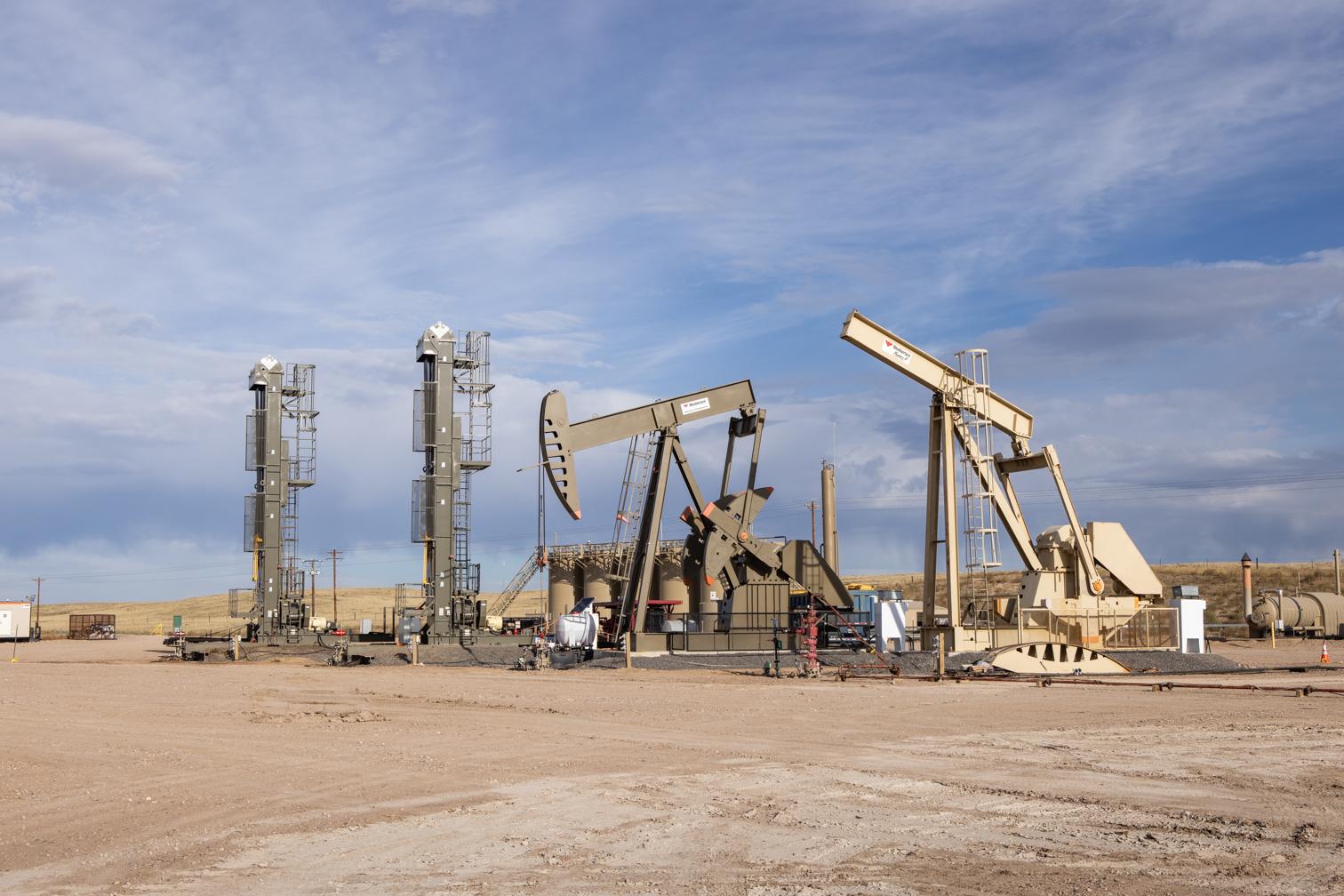
Drilling today is comprised of multimillion-dollar operations designed to efficiently produce oil and natural gas while minimizing impacts to the surrounding area. Advances in horizontal drilling and hydraulic fracturing have further reduced the number of well pads needed to realize a field's potential fully.
Oil and gas are transported from the source to midstream and downstream facilities through a variety of means, including a network of gathering and transmission pipelines. Currently, there are more than 500,000 miles of pipelines in the United States carrying oil and gas products, including more than 30,000 miles in Wyoming.
Pipeline companies invest heavily in the inspection and maintenance of this network to ensure their safe and continued operation.
Crude oil and natural gas are not ready for end-user consumption when extracted from the ground. These hydrocarbons must be processed into the various fuels and manufacturing feedstocks that are used to supply the market with a wide array of consumer products.
In addition to fueling our commutes and creating many of the products we use today, petroleum-based energy production is energizing our future. According to the U.S. Energy Information Administration, approximately 36% of all energy production in the United States is derived from petroleum-based fuels.
PAW Members take environmental responsibility seriously — not only because it is the right thing to do, but also because they call Wyoming home. The oil and gas industry invests heavily in education, research, and technology to ensure that production happens efficiently and sustainably.
The goal is to be good neighbors and pass on to future generations the open spaces, wildlife, and clean air we, here in Wyoming, enjoy today.